.jpg)
What is Codependency and How do I Overcome it?

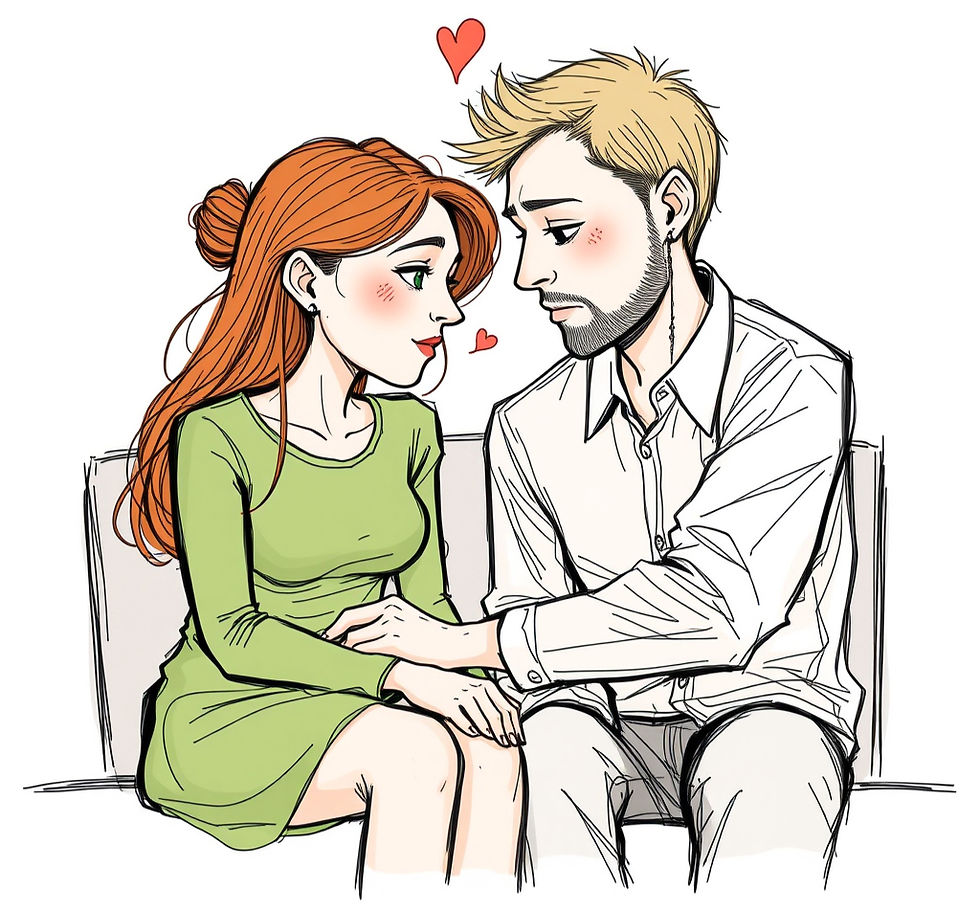
Codependency is a word that gets thrown around a lot on social media, twelve-step groups and in psychoeducational circles but what does it actually mean to be codependent? At its core, codependency is a set of learned behaviors that the person is using to cope with their dysregulated nervous system. There are marked symptoms of a codependent person which correlate to these behaviors and there are often modes of thinking associated with them as well which reinforce the set of behaviors. The most important thing to recognize is that codependence exists on a spectrum and while most of us might have behaviors or qualities that reflect codependence, it does not necessarily ruin our lives. Codependence is not something to be demonized or cured. It is a recognition of our distorted thinking and behaviors which manifest from that thinking. Each person has to decide how much or how little they wish to change those behaviors.
How to Identify Codependency
The first step in unlearning a behavior is to identify the behavior. We are going to take it a step further and identify what is driving the behavior, because it a self-journey of recovery, so it is more important for the reader to identify it in themselves than for someone else. Codependency can be identified through five major symptoms as described by Pia Mellody (1989), a woman who pioneered a lot of the clinical work on codependence.
1) Difficulty Experiencing Appropriate Self-Esteem.
2) Difficulty Setting Functional Boundaries
3) Difficulty Owning One’s Own Reality
4) Difficulty Acknowledging and Meeting One’s Own Needs and Wants
5) Difficulty Experiencing and Expressing Reality Moderately
These five symptoms reflect the core issues of what it means to be codependent. In the interest of clarity, “appropriate” self-esteem means you’re not the worst person in the world, but you’re also not the best. You are comfortable with the idea that you are in the middle of the bell curve without a need to create a hierarchy of superior/inferior people. If you feel like this Hierarchy is innate in the world, it might be a sign that this is something you struggle with. The reality is we all have things we are good at and things we are bad at, however, neither of these are a reflection of our value as a human being.
Functional Boundaries relates to our ability to say “no” whether that be physical, emotional, intellectual or sexual. Boundaries are how we identify where one person stops and the other person begins. They play a major role in dealing with enmeshment as the enmeshed state negatively correlates intimacy with boundary setting.
Own Your Reality deals with one’s ability to take accountability for their words, thoughts, actions and attitudes in life. Without this ability to take accountability, we often feel victimized by the world and the people in our lives. In some cases, there are situations where we are victimized, especially when we were children, however there is a big difference between being a victim and being in victimhood. The former recognizes the innate unfairness in the world and the latter identifies that unfairness as part of the Self. This identification with victimhood often leads to feelings of hopelessness and lack of control/agency. It can make justifying harmful behavior towards yourself and others very easy because after all, the world is unfair.
The ability to acknowledge and meet your own needs and wants ties directly into one’s ability to be independent. Many people misidentify the opposite of Codependence as Independence, but the actual opposite of Codependence is Interdependence. In an interdependent relationship, both individuals are capable of being independent and they come together in the spirit of harmony and cooperation. In a codependent relationship, one or both individuals are incapable of being independent and they come together out of the necessity for survival. An independent person is able to meet their own needs and wants whether that is financial management, emotional regulation, cooking their own meals, getting wake up on time, scheduling a calendar or any of the thousands items we associate with daily living. A codependent person may struggle with doing these things and as a result, try and find someone they can get to meet their wants and needs for them. This often leads to the other person feeling overburdened and resentful towards their codependent partner.
The last of the five core symptoms, experiencing and expressing reality moderately, relates to our ability to self-regulate. A person struggling with codependency often navigates life in extremes. If it is a bad day, it is likely the worse day anyone has ever lived. If it is a good day, then it is probably the best day ever experienced. Neither of these are true. This type of emotional experience is distorted and unconsciously fueled by our values, attitudes and beliefs. Happiness becomes elation through the subconscious narratives which run parallel to our experience of happiness. I feel happy; therefore, I am a good person. The happier I feel, the better I am as a person. As a result, if I am the happiest person, I am also the most morally upright person. Hopefully this captures how these narratives can fuel a “normal” experience and turn it into an extreme and although we used happiness, which we all probably want more of, the same is true (and I find more common) with negative emotions. Additionally, because “no man believes himself to be evil”, when we experience a negative emotion which is then fueled to the extreme by these narratives, it creates a significant level of distress in the individual and leads to acting out in self-destructive ways.
What if I struggle with Codependency?
There is a high likelihood that at least a few of these symptoms connected with you, and that is entirely okay. Codependence is not a binary. Because our personalities are fluid, there are situations where we may experience these things for a variety of reasons. I personally advocate against any identification with codependency (i.e. “I am a codependent”) because it is not an intrinsic part of being human. There are many reasons why these symptoms might appear in. If you love someone very dearly, like your own children, it is expected that you might struggle with setting functional boundaries with them more than you would your employer. If you are in an abusive relationship, your self-esteem is likely to suffer. If you have a chronic illness which is debilitating, obviously you will have trouble meeting your own needs and wants. Nothing about these issues are inherently problematic. They only become problematic when they start to disrupt our ability to live life fully.
If your ability to set functional boundaries with your children is so extreme that they run the household and not you, that is something you should probably address. If your chronic illness puts you at the mercy of your caregiver, probably something you should work with a professional on fixing. If your self-esteem is so low you constantly find yourself dating abusive people, then it’s a problem you’ll want to deal with. The most important thing I want to convey here is that these things become issues when we decide we are ready and willing to deal with them. This is why radical honesty is the first step to dealing with these issues. There is no sense in creating phantoms in our life just so we have something to fight.
What to do next
Let’s say after all this, you have identified that something needs to be done about the way you relate to yourself and others. You experience more than one of the symptoms at any given moment and they are fairly constant throughout your various relationships in life. What then?
The first step would be to find a support system to help you during your recovery. If this is something you struggle with, it is unlikely that you have many, if any, people in your life who are going to reinforce the new behaviors you are seeking to integrate. This support system may look like finding a therapist, joining a twelve-step group, or participating in psychoeducational group classes. After there is a support network in place, you’ll have to begin getting very, very honest with yourself about how you contribute to the dynamic. This process can be incredibly emotional and almost invariably will lead us to painful memories of childhood or past wounds. This is where the support network becomes invaluable to the recovery process because without the additional support, the pain from old wounds will likely cause a person to remember why they shut the door in the first place. The support network strengthens us to face our demons and clean out the skeletons in the closet so we can actually work through these issues and recover.
This process is not a “one and done” situation. Many people have a pretty big “surge” in recovery in the beginning s everything is new and there is backlog of things to address. I have found that after this, things will level out, but then new things will come up as one continues to work on these issues. Because codependence is rooted in our values, beliefs and attitudes, it exists at a very deep level in our psyche. Correcting the behaviors can be enough to fix our relationships and improve our interactions, but a person may still feel the emotional impact of the symptoms. Similarly, the recovery rabbit hole goes as deep as one is willing to venture.
I believe that it is 100% possible but be aware that a total shift may take several years of on-going work to fully uproot the weeds of codependence. The good news is that you will see improvements along the way and the majority of the journey will probably be much less painful than the very beginning. If you are struggling with codependent behaviors, fill out the contact form below and let's explore how I can help.
References
Mellody, P., Miller, A. W., & Miller, J. K. (1989). Facing codependence: What it is, where it comes from, how it sabotages our lives. Harper & Row.
Love this! Thank you for sharing, Matthew! Such great words of wisdom.